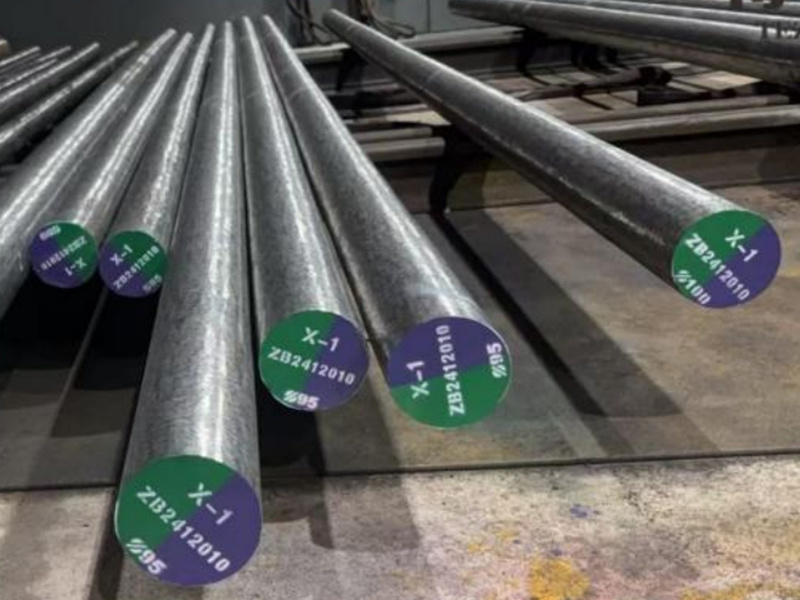
Essential Insights on Hot Work Steel for Forging in Construction and Decorative Materials
--- In the realm of construction and decorative materials, hot work steel for forging plays a pivotal role in crafting high-performance components that are essential for various applications. This type of steel is specifically designed to withstand the rigorous demands of high-temperature processing, making it an invaluable asset in manufacturing and construction projects. Hot work steel is typica
2026-09-02
Understanding Hot Work Tool Steel: Key Features and Benefits
Understanding Hot Work Tool Steel: Key Features and Benefits In the realm of construction and manufacturing, the choice of materials significantly impacts the efficiency and quality of production processes. Among the various materials available, **hot work tool steel** stands out as a critical component in a wide range of applications. This article explores the essential features and advantages of
2026-08-30
The Essential Guide to Forged Die Steel: Properties, Applications, and Benefits
Forged die steel is an essential material widely used in the construction and decoration sectors, particularly in applications requiring high strength and durability. The process of forging involves shaping metal using localized compressive forces, resulting in a material with superior mechanical properties compared to conventional steel. This unique production method enhances the density and stru
2026-08-27
Discover the Transformative Benefits of Special Tool Steel Material for Your Next Project
Discover the Transformative Benefits of Special Tool Steel Material for Your Next Project Table of Contents 1. Introduction to Special Tool Steel 2. What Is Tool Steel? 3. Benefits of Using Special Tool Steel 3.1 Durability and Strength 3.2 Versatility in Applications 3.3 Cost-Effectiveness 3.4 Enhanced Performance
2026-08-24
Exploring the Strength: Why Hot Working Die Steel is Essential in Construction
Exploring the Strength: Why Hot Working Die Steel is Essential in Construction Table of Contents Introduction to Hot Working Die Steel What is Hot Working Die Steel? Properties of Hot Working Die Steel Applications in Construction Advantages of Using Hot Working Die Steel Comparison with Other Steel Types Future of Hot Working Die Steel in Construction FAQs Con
2026-08-18
Hot Working Die Steel Technology Enhances High-Temperature Manufacturing Performance
Best hot working die steel customize offers high-temperature resistance, excellent toughness, and OEM solutions for forging dies, extrusion tools, and industrial molds.
+8615572985655
Email: info@hbzbmj.cn
Address: No. 128, Zhang Zhihe Avenue, Dapaishan Village, Xisaishan District, Huangshi City, Hubei Province
Follow us
Products
Capacity
Service
Blog
About Us
Contact
Hot-Working Die Steel
Cold-Working Die Steel
Plastic Mold Steel
Die Steel Forging Series
Special Tool Steel
Product Customization
whatsApp:8615572985655
Tel:+8617671227388
Email:info@hbzbmj.cn
Welcome to leave a message online, we will contact you in time